

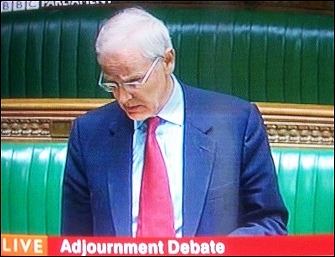
Burnham-On-Sea’s MP this week clashed with a government minister over controversial plans to ban the use of traditonal light bulbs in the UK.
Speaking in a House of Commons debate about the environment on Thursday (January 22nd), David Heathcoat-Amory hit out at the EU and governement plans to remove traditional light bulbs from shop shelves across the UK and replace them with what he claims are “more expensive and hazardous” environmentally-friendly ones instead.
“The Government are going to ban the use of incandescent light bulbs before they are required to do so,” he said.
“Is the Minister aware that the alternative bulbs are not only more expensive, but hazardous because they contain mercury, are unsuitable for certain applications — either because they come on too slowly or give out too little light, which can again be dangerous — and totally unsuitable for things like picture lights in galleries and so forth? Will she rethink her policy of gold-plating the EU requirement and rethink banning the use of those bulbs before that is necessary?”
Joan Ruddock, Parliamentary Under-Secretary for the Department of Energy and Climate Change, responded during Thursday’s debate: “I hear what the right honourable gentleman says, but I would be very surprised if his front bench team did not support the use of energy-efficient bulbs in place of the inefficient ones in use today.”
“If every household in the country changed, 5 million tonnes of carbon would be saved, so it is extremely important that we make that change. The right honourable gentleman says that they are dangerous, but there is only a tiny amount of mercury in those bulbs and disposal facilities are available in every local authority to get rid of them safely: people can just throw them away and if they have an accident, it is simple to deal with it.”
She added: “A few people with particular medical conditions may be sensitive to such bulbs. We are looking into that carefully and working on it with the Department of Health.”