


Somerset County Council has announced which roads in the Burnham-On-Sea and Highbridge area will be gritted this winter.
The priority for the 23 gritters in Somerset will be “roads that link major towns, villages and communities on high ground and the important routes across the County for long distance travel,” says the council.
Queen’s Drive, Love Lane, Oxford Street, Burnham Road and Highbridge Road and the A38 to the M5 junction at Edithmead are all on the gritting map, shown here.
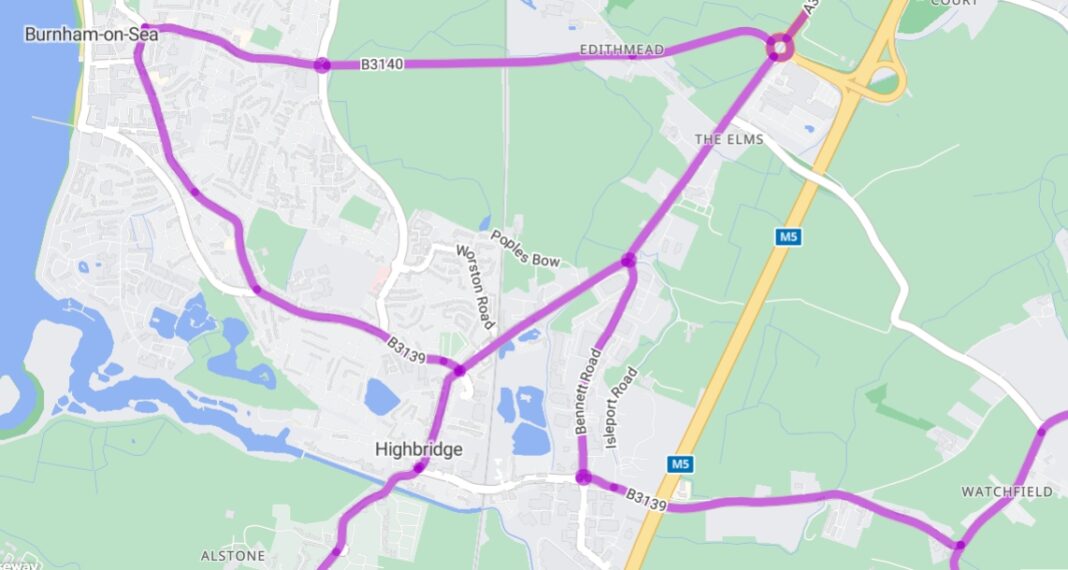
The main A38 / A370 from Highbridge to East Brent and north to Weston is also on the map to be gritted. And the B3139 and Causeway between Mark and Wedmore are also included, along with the A38 between Rooksbridge and Axbridge.
The gritting map here shows that in the Burnham-On-Sea area, the M5 through our area will also be gritted as normal by Highways England.
Somerset Council and its winter service partner Kier Transportation Ltd say their fleet of gritters is ready to keep the county’s roads moving safely this winter.
With freezing temperatures and snow on the horizon, the teams are geared up to treat key routes across Somerset. Last winter, crews were deployed 1,679 times, covering over 117,000 miles and spreading more than 6,000 tonnes of salt to combat icy conditions.
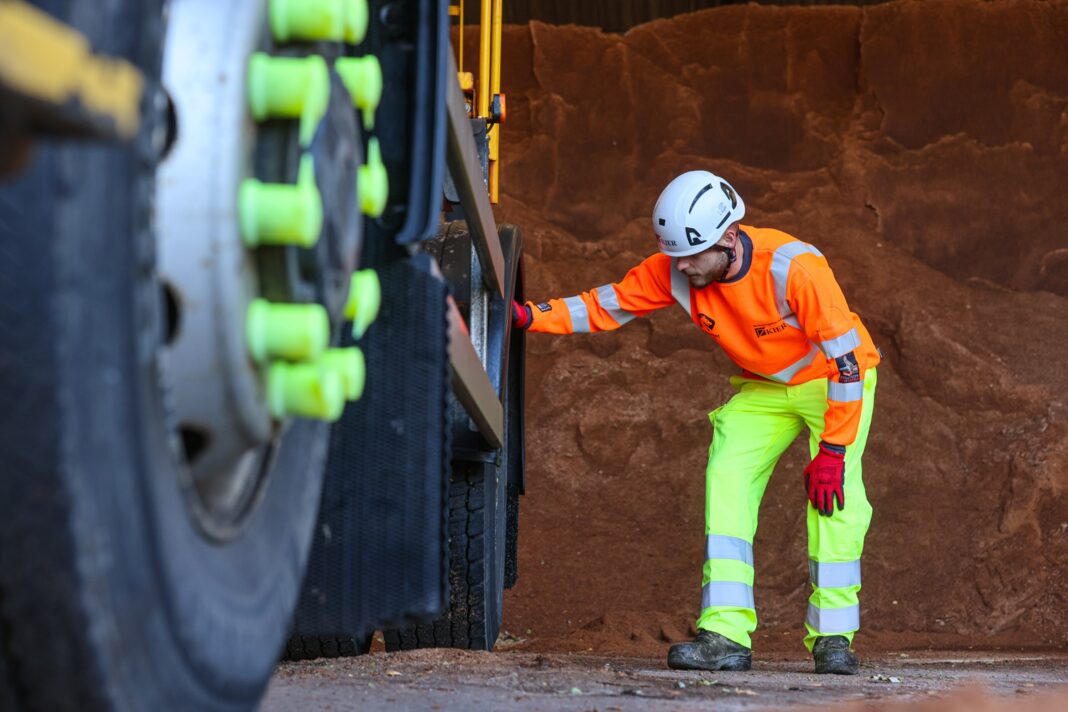
Councillor Richard Wilkins, Lead Member for Transport and Waste Services, praised the dedication of the winter crews: “They go out in all weathers to keep Somerset safe. We owe them a huge thank you.”
Gritting typically takes place when road surface temperatures are forecast to dip below 1°C, with operations often occurring in the evening or early morning. Despite treatment, ice can still form, and drivers are urged to adjust their driving to suit conditions and avoid overtaking gritters while they’re working.
Preparations began in the summer, with salt barns filled and weather stations across the county providing daily forecasts. In the event of snow, gritters can be fitted with ploughs, and local farmers are on standby to assist with clearing routes.
Community resilience is also a focus, with roadside grit bins being topped up and the snow warden scheme continuing in partnership with parish councils.

Somerset Council are responsible for gritting roads in Somerset, except for the M5, A303 and A36 which are treated by Highways England.
“Resources are not available to treat all roads so criteria have been used that meet national guidelines to enable the precautionary salting network to be defined. This has been done to ensure a consistent approach across the county and achieve a responsible balance between cost and level of service.”
The criteria used to define the gritting routes are:
- Connectivity between major communities
- Links to the strategic highway network
- Connectivity across authority boundaries where appropriate (including Highways England defined diversion routes from the A303, A36 and M5 motorway)
- Links to transport interchanges
- Access to emergency facilities including Fire and Rescue, Police, Ambulance Services and A&E hospitals
- Links to critical infrastructure
- Primary bus routes which serve major communities where the treated route is not viable – and the community would otherwise have no other public transport provision (not including school bus routes)
- Other locally important facilities (for example Yeovilton Air Station, major quarries, major food distribution centres)
- Major settlement (500 addressable properties) links
- Settlements (50 addressable properties) above 500 feet links
- Links to urban schools (500+ pupils) and rural schools (300+ pupils)
- Other sections of the highway network to ensure route continuity