

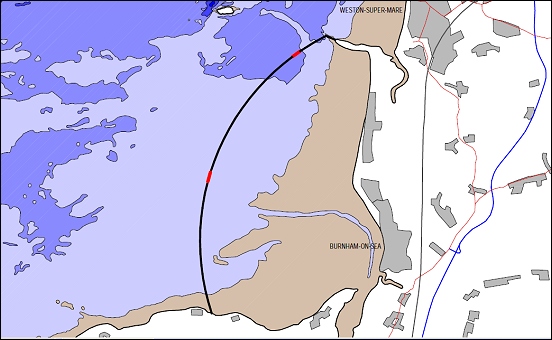
A £4bn tidal lagoon that could protect Burnham-On-Sea from coastal flooding was officially named as one of the five barrage schemes being considered a shortlist by the government on Monday (January 26th).
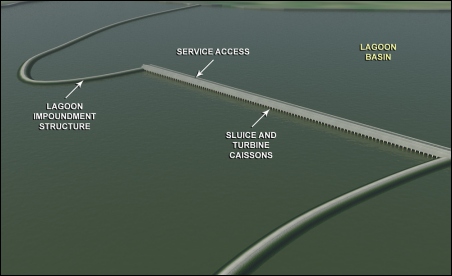 The ‘Bridgwater Bay Tidal Lagoons’ scheme, pictured here, is one of the projects selected from the ten examined during the last six months.
Backers of the lagoon say the proposal would be less damaging to wildlife than the barrage schemes.
The Bridgwater Bay tidal lagoon would stretch across the estuary from Brean Down to Hinkley Point and would generate an estimated 2.6TWh of power per year. The scheme has a projected construction cost of between £3.4-£4.1bn.
The government report on the five barrage schemes says the lagoons would “potentially be less detrimental on local ports and fisheries than barrages, but would see a 5,500ha intertidal habitat loss.”
“There is also the possibility of sediment build-up within the impounded area and this needs further investigation in phase two.”
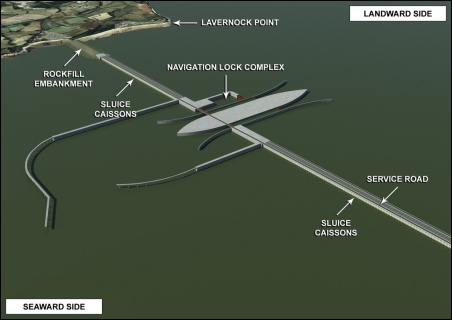 The report added that the Bridgwater Bay tidal lagoons would also be the best performing Bristol Channel lagoon on cost of energy.
Among the five schemes on the shortlist is also a barrage from Lavernock Point in Glamorgan to Brean Down, near Burnham-On-Sea, pictured right.
The preferred project will be selected in 2010 and a three-month public consultation period on all ten projects and the proposed shortlist began on Monday.
The shortlist was unveiled on Monday morning in Bristol by Energy and Climate Change Secretary Ed Miliband, who said: “Fighting climate change is the biggest long term challenge we face and we must look to use the UK’s own natural resources to generate clean, green electricity.”
.SEVERN BARRAGE SHORTLIST
The five proposed projects on the shortlist, which will now be put out to public consultation, are:
 The Cardiff – Weston Barrage: a 10-mile barrage crossing the Severn Estuary from Brean Down, near Burnham, to Lavernock Point, near Cardiff. which could generate nearly 5% of the UK’s electricity.
Shoots Barrage: a scheme further upstream of the Cardiff – Weston project which could generate a similar amount of energy to a large fossil fuel plant.
Beachley Barrage: the smallest barrage on the proposed shortlist, just above the Wye River.
Bridgwater Bay Lagoon: a proposal which would impound a section of the estuary on the coast between Hinkley Point and Brean Down.
Fleming Lagoon: a similar scheme on the Welsh shore of the estuary between Newport and the Severn road crossings.
“The Severn estuary has massive potential to help achieve our climate change and renewable energy targets. We want to see how that potential compares against the other options for meeting our goals.”
“We have tough choices to make. Failing to act on climate change could see catastrophic effects on the environment and its wildlife, but the estuary itself is a protected environment, home to vulnerable species including birds and fish.”
“We need to think about how to balance the value of this unique natural environment against the long-term threat of global climate change.”
Conservationists are concerned a barrage could be devastating for the wildlife that resides in the mud flats around the Estuary.
A study for the RSPB suggested a 12-mile tidal ‘reef’ could be cheaper and less damaging to wildlife than a barrage. While a barrage would effectively dam the estuary, the reef would not hold back the full height of the tide and therefore have less impact on those sites.
Martin Harper, head of sustainable development at the RSPB, said: “It is hugely disappointing to see Government still pushing forward with the environmentally destructive option of a Cardiff-Weston barrage. We believe the focus should shift to innovative and potentially less damaging alternatives like a tidal reef or tidal fence.”
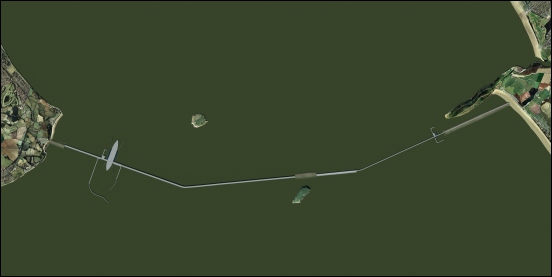
A proposed barrage between Brean Down and Wales, pictured above, is still one of the front-runners
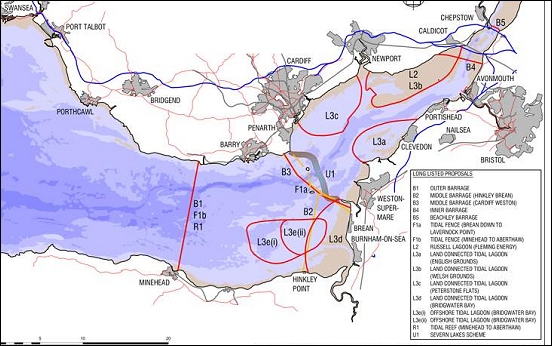
Numerous proposals for barrages and lagoons in the Bristol Channel have been considered in recent years, as pictured here