

Claims from a leading environmental charity that the proposed Severn Barrage would lead to beaches in the Burnham-On-Sea area being ‘strewn with dead fish’ have been rejected by one of the potential developers this week.
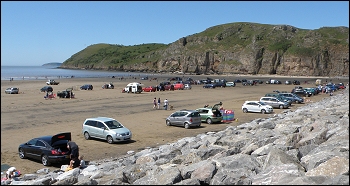
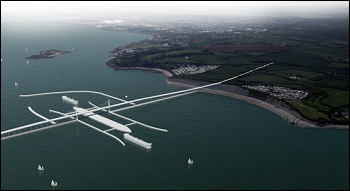
The Marine Conservation Society (MCS) argues that the barrage, which could stretch from Brean Down to Lavernock Point in Wales, would pose a threat to local beaches due to damage to marine wildlife.
Dr Robert Keirle, MCS Pollution Programme Manager, says: “Although the barrage’s promoters have said the turbines have been re-designed to be more fish-friendly we’re still concerned that, once operational, the barrage may have an unacceptable impact on fish stocks within the Severn estuary. We could see mutilated fish washing up along huge stretches of coastline. Favourite beaches like Weston and Brean could end up being strewn with dead fish.”
But Gareth Woodham from the Severn Lake barrage project this week rejected the concerns, telling Burnham-On-Sea.com: “There would be no impact to fish from our 221 underwater turbines, which would measure seven metres in diamater and have five blades turning at six revolutions a minute.”
“I would happily dive through the turbines myself to demonstrate that there would be no danger to fish. Other potential schemes use turbines that are less friendly to fish, but the Severn Lake’s technology is safe.”
 In its statement, the Marine Conservation Society goes on to say that the public are being misled when it comes to the true cost of the project.
“Electricty produced will need to be subsidized by the UK taxpayer and will probably cost up to twice as much as electricity produced elsewhere. If the barrage produces power for 120 years, as the developers estimate, that will be a huge bill for successive Governments to foot,” said Dr Keirle.
“MCS would far prefer to see a mixed bag approach taken to the generation of renewable energy, consisting of on and offshore wind turbines, tidal lagoons, and wave and tide turbines, all of which need to be sensitively located and undergo full environmental impact assessments.”
“As a concept, MCS is strongly supportive of renewable energy, as it will lessen our dependence on so-called fossil fuels like coal, gas and oil, and make a significant contribution to meeting the UK Government’s legally binding target of at least an 80% cut in greenhouse gas emissions by 2050.”
Peter Hain MP, who left his post as shadow Welsh Secretary earlier this year to back the project, recently met with David Cameron to promote the barrage and the PM has since instructed civil servants to take another look at the project, which it is estimated will cost as much as £34billion.