

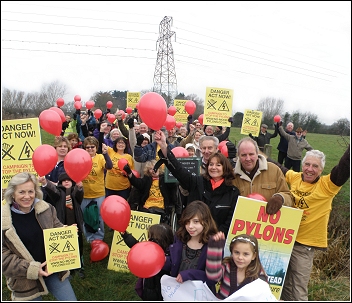
Campaigners opposed to plans for a line of huge new power pylons running through the Burnham-On-Sea area have this week welcomed a new independent report that has showed National Grid greatly over-estimated the costs of burying the electricity cables underground.
The report has concluded that although under-grounding electricity cables is more expensive then overhead lines, the cost is just 4.5 to 5.7 times more expensive, not 10 to 25 times more expensive as has previously been quoted by National Grid.
Campaigners against the 46.5m tall pylons earmarked for the Burnham area said on Tuesday that the reduced costs should encourage National Grid to bury them instead.
However, National Grid’s David Mercer said: “If you put the whole of the Bridgwater to Seabank line underground, it would cost £850m more than running it overhead.”
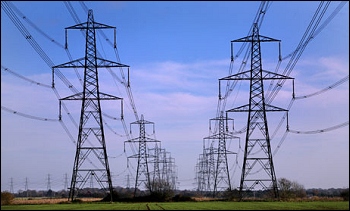 “That is an enormous amount of money and it would have to go on consumer bills. It would be £1 extra for every domestic consumer for the next 40 years. What is needed here is a balance between the visual impact and the cost to consumers.”
He said that National Grid will be looking at where the most “sensitive areas” of the pylone route are before considering which could benefit from undergrounding. A final decision is expected in the summer.
Burnham’s MP, Tessa Munt, welcomed the report, saying: “I am delighted with this report – we have waited two and a half years to get this accurate information. National Grid was categorical back in 2010 that it would cost 17-20 times more to put the lines underground, but this is clearly not the case.”
These findings vindicate the arguments of the local No Moor Pylons protest group and, nationally, the Campaign to Protect Rural England (CPRE) who have questioned previous cost estimates made by National Grid.
Tom Leveridge from the CPRE added: “We believe we have been vindicated in our claims that National Grid has historically over-estimated the cost of undergrounding power cables.”
“This evidence from this report shows that the current public consultations into nearly 300 miles of new power lines have been proceeding with inaccurate information. We want National Grid to call a halt to any planned construction and restart the consultation process but this time with the real costs and benefits made clear. We are also calling for a further study that looks at the wider social and environmental costs of energy transmission.”
The report was produced by Energy consultants Parsons Brinckerhoff in association with Cable Consulting International, with the Institution of Engineering and Technology (IET) providing quality assurance.